P4 POWER COACHING™
P4 Power Coaching™
Blogs

When the Problem Isn't the Person
Even after all these years, we’re still surprised by how often a perceived issue with a person turns
out to be a process problem.
In our work, we consistently see three root causes when processes fail:
1. A lack of clearly defined or documented systems and standards
2. Breaks in the process that have gone unidentified or unacknowledged
3. Inconsistent follow-through—where not everyone at every phase is fully following the process
These challenges show up in both product- and service-based organizations—and the cost isn’t
just financial. It’s emotional. Relational. Cultural.
Tom learned this the hard way.
A Costly Assumption
Tom was a senior leader in a growing organization. Reliable. Results-driven. Highly respected.
But one employee had become a recurring frustration. Deadlines slipped. Errors popped up.
Follow-through felt inconsistent.
Tom assumed the issue was accountability.
He coached harder. Checked in more often. Documented conversations. Yet nothing
improved—and tensions rose.
The employee grew defensive. Tom grew impatient. The rest of the team quietly absorbed the
stress.
Something wasn’t adding up.
Pulling the Thread
When we stepped back and mapped the workflow, a very different picture emerged.
There was no clearly documented standard for one critical step in the process.
There was a handoff between departments where responsibility was assumed—but never
clarified. And while some team members followed the informal process closely, others had
developed their own workarounds.
In other words, the employee wasn’t failing. The process was fractured.
The Human Cost of Process Breakdowns
Because the problem had been framed as a people issue:
An employee felt blamed and demoralized
A leader felt frustrated and mistrustful
A team felt the tension and uncertainty
Stress increased—without improving results
When human beings are blamed for broken systems, people don’t just burn out—they disengage.
And once disengagement sets in, performance declines even further.
The Turning Point
Once Tom recognized the real issue, everything changed.
Instead of asking, “Why isn’t this person doing their job?”
He began asking, “Where is the process unclear or breaking down?”
Standards were documented.
Ownership at each phase was clarified.
Expectations were communicated consistently to everyone involved.
Within weeks:
Errors dropped
Tension eased
The employee’s confidence returned
Tom’s leadership credibility strengthened
Not because he pushed harder—but because he led smarter.
The Bigger Leadership Lesson
Processes don’t fail loudly.
They fail quietly—through assumptions, gaps, and inconsistencies.
And when leaders don’t slow down to examine the system, people end up carrying the weight.
Strong leadership means having the discipline to look beyond behavior and ask whether
the structure is setting people up to succeed—or struggle.
A Practical Takeaway
Before correcting a person, verify the process. Before escalating accountability, confirm the
standard.
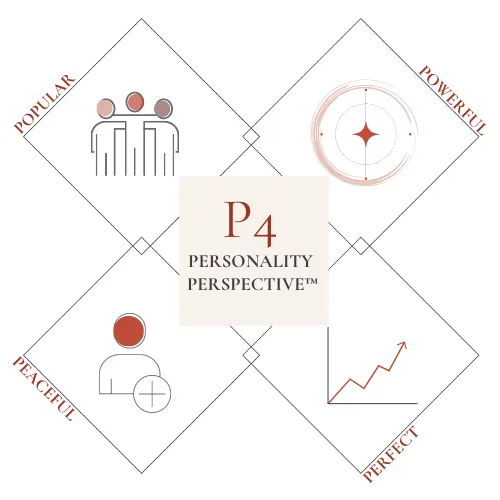
Frameworks like P4 Personality for Professionals™ help leaders recognize when stress,
frustration, or underperformance may be rooted in misaligned systems—while also equipping
them to communicate expectations clearly to different personality types.
Because when processes are clear, people can breathe again—and perform at their best. And
process improvement is the sweet spot for profits.
Organizations using P4 Personality™ often revisit processes with fresh clarity. Licensing P4
Personality for Professionals™ helps ensure consistency across departments and roles. At P4
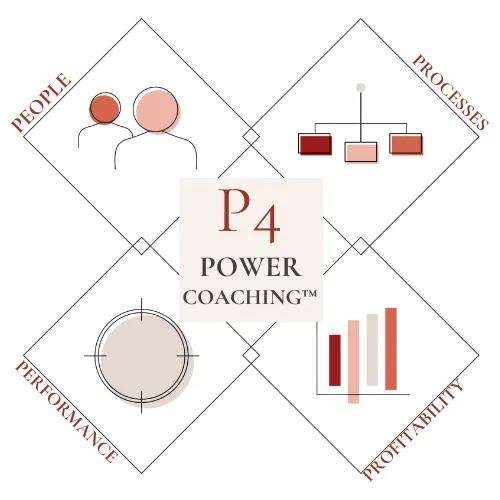
Power Coaching™ our mission is to help increase the income and strengthen the sustainability
of American businesses by focusing on the people, processes, and performance that prime
profitability.





P4 POWER COACHING™
©2025 ANITA BROOKS
PRIVACY POLICY
TERMS · CONDITIONS